A golden era for Georgia Rowing
Coach Nathan Lantz on new standards, real speed, and why the team can’t wait for spring.
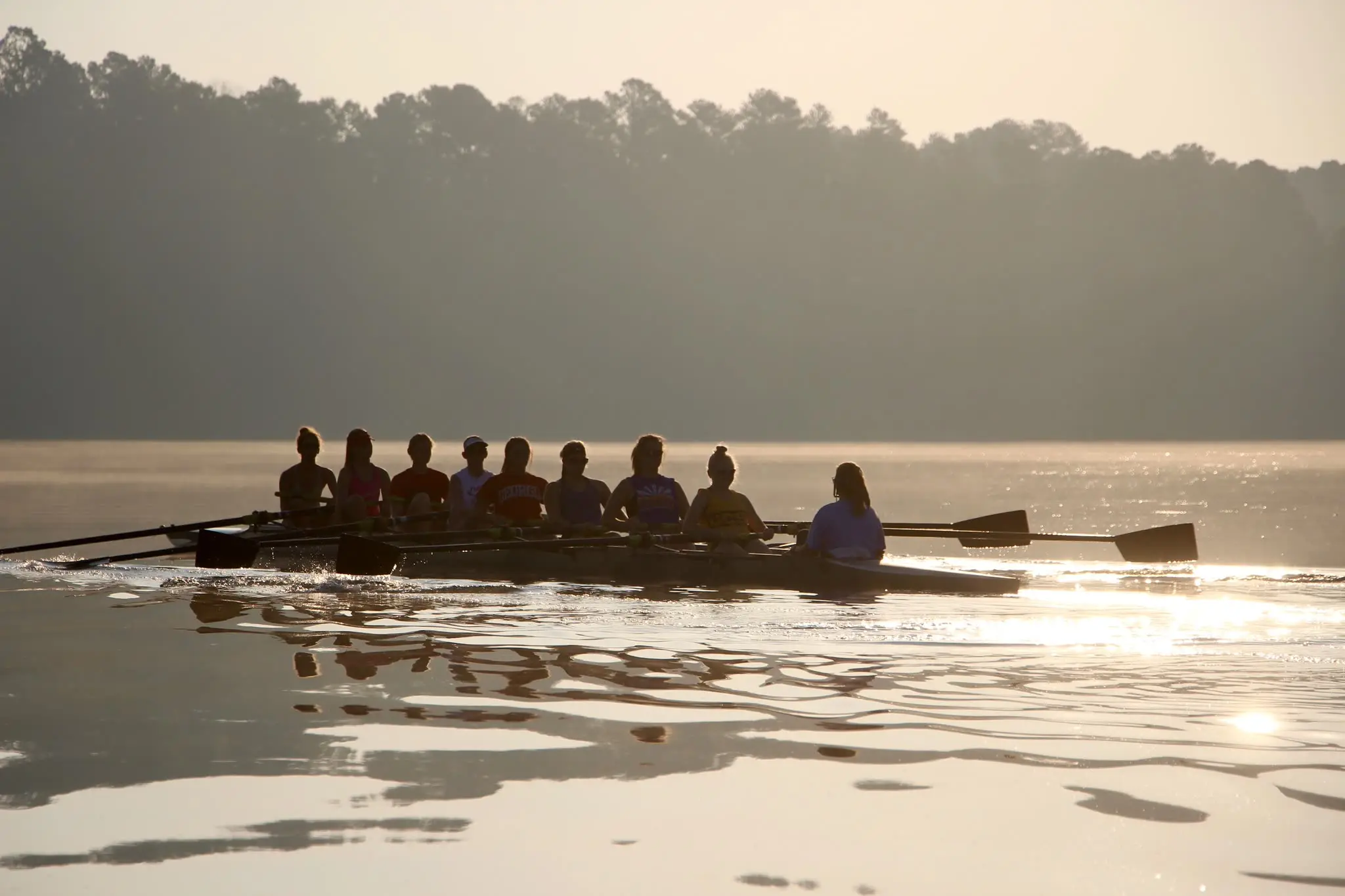
Hey there,
We planned to introduce you to a current rower this month. Instead, we called someone who has seen more Georgia Rowing seasons than almost anyone: Coach Nathan Lantz. Nathan rowed at UGA from 2005 to 2009 and has coached the team since fall 2009. Here’s his look back at the fall season.
It started with the captains
Before the season began, the captains requested a meeting with the coaches where they asked to raise the standard for the whole team. The new bar: to race, varsity rowers had to meet a minimum training requirement each week. This was something the team had implemented previously, but had not really come back during the team’s post-COVID rebuild.
“Sometimes the coaches make those pushes by themselves,” Nathan says, “and it can be hard to stay the course, because change is hard for everyone.” This time, the captains brought the push to the coaches, and they held the line together.
“It’s a lot easier, with myself and the two captains, to say, nope, that’s not good enough,” Nathan says. “The standards moved up right from the beginning.”
Then the results came in
Everyone who raced this fall had trained consistently, and it showed. Nearly every Georgia boat finished in the top half of its event, the B and C boats included.
- Head of the South: two men’s fours finished 2nd and 5th in a field of about 17, and both men’s varsity eights medaled in their categories.
- The women’s varsity eight finished first in two races this fall, three counting the scrimmage.
“At Head of the South, every [podium] was just Georgia Tech, Clemson, Georgia, in some order,” Nathan says. “There didn’t even have to be an ‘I told you so’ moment about the training. Everyone just got to see it in the results.”
The fall erg tests tell the same story. Rowers with four or five years in the sport are PRing their 6K by 2–3 splits. Five current rowers (two men and three women) have times on the team’s all-time top-10 6K lists.
November is usually when rowers are ready for a break. This year, Nathan kept hearing something else. “The kids were still saying, ‘Coach, I’m excited for spring,’” he says. “You could tell people felt like they were getting faster. The boats were faster. The rowing was better.”
The third golden era
COVID hit Georgia Rowing hard. The team runs largely on dues, so its size matters, and during COVID the roster shrank to a fraction of what it had been. Fewer dues meant equipment upgrades had to wait, and for a few years the program was just holding on. “Post-COVID was really hard for our program,” Nathan says.
Things look very different now. Nathan has been with the team for more than 20 years, and he believes it’s in its third golden era, after 2004–07 and 2016–19. The boats are newer, the team is bigger, and the student leaders are some of the best he’s seen. “The rowing’s looking really good. The equipment’s looking really good. The team culture feels really nice.”
In the last three years alone, Georgia Rowing has had:
- the team’s first ACRA national championship, the men’s quad, this past spring
- 3 ACRA medals
- 9 rowers on the team’s all-time top-10 lists
- 9 ACRA All-Freshman and All-American honors
- 12 new beast records
- 5 new shells, new oars, new ergs and a brand-new dock
Nathan is quick to say none of it is his alone. “I get the benefit of standing on so many people’s shoulders,” he says, crediting the coaches, rowers and alumni who came before him. His message to this year’s team: “It’s a great moment to just dive in and get to enjoy it.”
Where you come in
There will always be programs with more money than Georgia. At ACRA, the fastest men’s eights train with telemetry systems that put each rower’s force curve on a screen in front of them as they row, at $15,000 to $20,000 a boat. “That’s just not going to be us,” Nathan says, and that’s OK. Georgia punches above its weight anyway. “I feel like we do very well for not having a lot of the resources.” With a bigger team, an experienced coaching staff and help from alumni, like the support that built the new dock, he thinks the team is a couple of years from a real jump.
That’s what the GRAA is here for. Our fall goal is $6,000, the first step toward matching the generous $25,000 gift we received in October and putting a new men’s quad on the water for the crew that won Georgia’s first national title.
The third golden era is happening right now. Don’t watch it from the sidelines; help the team make this jump. Every gift counts.
Thank you to Nathan for his time, and to every coach who gives their early mornings to this team.
Go Dawgs!
The GRAA board